

The US president conditions the pause on a rapid final agreement to reopen the Strait of Hormuz and resolve nuclear concerns, as regional allies push for de-escalation.
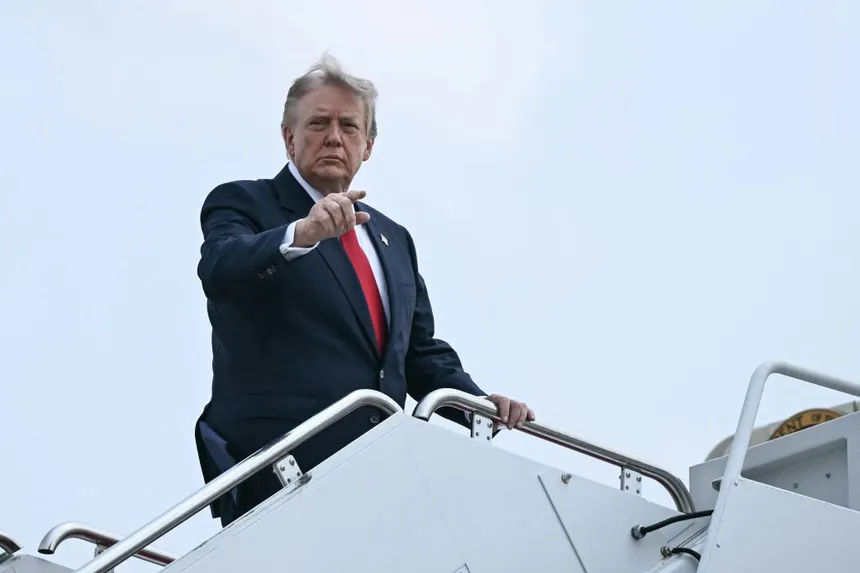
WASHINGTON: US President Donald Trump announced late Saturday that he has canceled a planned large-scale military strike against Iran following requests from Tehran and Middle Eastern allies, claiming the framework for a comprehensive deal has been reached to end the escalating conflict.
Writing on his social media platform Truth Social, Trump stated that Washington and Tel Aviv agreed to hold off on planned attacks targeting Iranian infrastructure after receiving assurances that a broad diplomatic agreement is within reach. The president emphasized that the suspension of military action remains strictly contingent on all parties rapidly finalizing the terms.

According to the US president, the negotiated perimeters center on the immediate and unconditional reopening of the Strait of Hormuz—a vital maritime bottleneck for global energy shipping—alongside verified commitments to end Iran’s nuclear weapon capabilities.
“The USA is locked and loaded and ready to go against the Islamic Republic of Iran, at levels of military terror, strength, and power not seen since World War II,” Trump wrote. He added that the decision to pause was made “for the future benefit of the world and, likewise, the survival of a successful and prosperous Iran.”
Trump confirmed that Israel had also agreed to suspend its scheduled operations to give diplomatic channels space to operate. “Get to work, everybody, and get it done,” he urged regional negotiators.
The sudden shift follows intensive backchannel diplomacy across regional capitals. Prior to Trump’s statement, Iranian Foreign Minister Abbas Araghchi engaged in high-level phone consultations with counterparts in Saudi Arabia, Turkey, and Pakistan. During discussions with Saudi Foreign Minister Prince Faisal bin Farhan, Araghchi issued a sharp warning that any fresh aggression by the US or Israel—or assistance provided to them by regional nations—would draw a “decisive and proportionate response” from Iranian armed forces.
Saudi Crown Prince Mohammed bin Salman also held direct discussions with Trump, seeking clarity regarding US military intentions and urging Washington to refrain from actions that could trigger an uncontrollable regional war.
Diplomatic engagement has intensified as economic and security risks mounted across the Gulf. Tehran’s partial maritime restrictions through the Strait of Hormuz had threatened global oil supplies and heightened military alerts throughout neighboring states. In response to the persistent instability, the US State Department updated its regional security advisories, prompting American citizens across several Middle Eastern nations to evaluate commercial departure options.
While Trump framed the announcement as a decisive breakthrough, officials in Tehran maintained a cautious tone. Senior Iranian lawmakers noted that while Washington publicly projected military pressure, existing diplomatic avenues were actively used to request negotiations. Tehran has consistently insisted that any permanent resolution must formally address Iranian maritime sovereignty and guarantee the lifting of economic sanctions.
Military posture in the region remains at peak readiness. US Defense Department leadership had previously advised the White House on the operational limits of extended aerial bombardment, underscoring the necessity of a diplomatic resolution. Negotiators are now expected to assemble in the coming days to translate the proposed framework into a binding multi-phase accord.