

Tehran conditions transit on seven demands, sending freight charges up 43-fold while regional crude flows surge to 22.5 million barrels per day despite maritime strikes.
DUBAI / LONDON — October 05, 2026 : Supertanker charter rates surged to a record $1.3 million per day on Monday as Iran declared the vital Strait of Hormuz closed to traffic, driving maritime transport costs up 43-fold while Tehran replaced its oil minister amid intensifying regional confrontation.
The dramatic freight escalation follows statements by Iranian Parliament Speaker Mohammad Bagher Ghalibaf, who announced that passage through the strategic waterway will remain suspended until Washington satisfies seven conditions grounded in a 14-point June Memorandum of Understanding. Delivering an address to parliament, Ghalibaf dismissed recent US proposals conveyed via third-party mediators, declaring the “era of wasting time is over.”
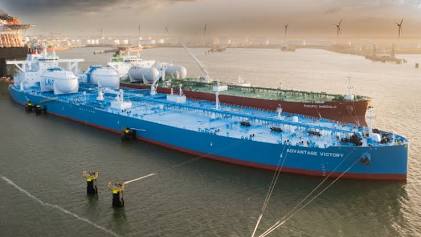
The maritime standoff delivered an immediate shock to shipping economics. Daily charters for Very Large Crude Carriers (VLCCs) along the benchmark Middle East-to-East Asia route jumped to $1.3 million, up from $30,000 in early January, according to data from shipping consultancy Poten & Partners. At current spot quotes, logistics expenses now add roughly $33 to every barrel moved—accounting for nearly 27% of delivered cargo value, compared with just 3% earlier this year.

Physical supply dynamics showed counterintuitive resilience across terminal loading docks. Seaborne crude shipments from regional producers excluding Iran climbed above pre-war figures late last week, touching 22.5 million barrels per day across four separate sessions, according to maritime flow data compiled by Kpler. Prior to the escalation, outbound regional shipments had averaged 18 million barrels daily.
Heightened risks continue across maritime choke points. The United Kingdom Maritime Trade Operations (UKMTO) documented a fresh strike against a commercial tanker transiting the Strait of Hormuz, while a separate merchant vessel navigating waters off Yemen reported multiple surrounding explosions.
In response to regional sea lane threats, the Saudi-led Coalition to Restore Legitimacy in Yemen reaffirmed military support for Yemen’s armed forces. Coalition spokesman Maj. Gen. Turki Al-Maliki stated in a press briefing that operations will continue to counter Houthi attacks against international merchant shipping across the southern Red Sea and the Bab Al-Mandab Strait, as well as cross-border threats aimed at Saudi territory.
Diplomatic posturing in Tehran remained unyielding even as domestic administrative shifts emerged. Iranian Foreign Minister Abbas Araghchi stated there is “no military solution” to the ongoing confrontation. Concurrently, President Masoud Pezeshkian accepted the resignation of Oil Minister Mohsen Paknejad, who departed citing personal circumstances after an initial refusal of his request. Hamid Bovard, chief executive of the National Iranian Oil Company, was appointed acting oil minister by presidential decree, state broadcaster IRIB reported.
On international exchanges, global benchmarks diverged sharply. Brent crude climbed 0.38% to $102.60 a barrel in early Asian trading, while Abu Dhabi’s flagship Murban grade advanced 1.30% to $110.80. US benchmark West Texas Intermediate dipped slightly to $91.09, and natural gas settled lower at $3.011 per million British thermal units.
Across Western defense postures, repositioning took effect over the weekend. The Pentagon confirmed the redeployment of all US B-1 Lancer strategic bombers out of RAF Fairford in the United Kingdom following a localized perimeter security breach.