

Tehran warns regional neighbors against joining US sanctions as rial hits record low and internal leaks point to systemic corruption and fear of new uprisings.
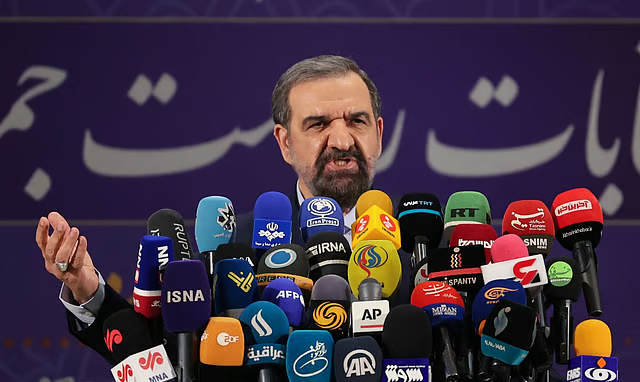
TEHRAN / DUBAI — August 24, 2026:Iran’s top security official Mohsen Rezaei has threatened to halt all oil exports from the Gulf if Washington’s economic pressures persist, issuing warnings to neighboring states as Tehran faces a collapsing currency, rampant internal fuel smuggling, and growing fears of domestic unrest.
Rezaei, who was appointed Secretary of the Supreme National Security Council earlier this month by Supreme Leader Mojtaba Khamenei, declared that any country facilitating American sanctions against Tehran would be treated as engaging in an “act of war”. He warned that if Washington’s economic confrontation continues, no crude oil would be exported through the Strait of Hormuz or anywhere else in the Gulf region.
The aggressive rhetoric comes alongside new maritime regulations issued by Iran’s Gulf Strait Authority, threatening non-compliant commercial vessels with fines, impoundment, or seizure if they violate Iranian protocols or engage in ship-to-ship transfers with blacklisted entities.

Despite these warnings, international shipping monitors indicate Tehran’s practical control over the maritime corridor is waning. According to data from the UK Maritime Trade Operations (UKMTO), nearly 200 merchant ships crossed the Strait of Hormuz last week, up from 150 the previous week, as more vessels utilize US-backed naval transit routes.
Inside Iran, the economic situation is deteriorating rapidly. On Sunday, the Iranian rial hit an all-time low on the open market, trading past 2 million rials (200,000 tomans) against the US dollar. The plunge comes as Washington prepares to unveil what US Treasury Secretary Scott Bessent termed “the toughest sanctions in history” to target Tehran’s shadow financial networks, exchange houses, and oil smuggling operations.
The economic strain is compounded by severe internal corruption. Esmail Saqab Esfahani, a presidential deputy overseeing fuel optimization, publicly disclosed that political figures across major factions are actively involved in massive fuel-smuggling syndicates. Official estimates indicate that 20 million to 30 million liters of subsidized fuel are illicitly moved out of Iran daily to exploit price differences in neighboring countries. Esfahani warned that efforts to dismantle these politically connected networks face severe resistance and personal threats against enforcement officials.
The convergence of economic paralysis, hyperinflation, and corruption has heightened concerns within Tehran regarding survival. Former Economy Minister Ehsan Khandoozi warned that economic hardship and proposed energy price adjustments could spark widespread protests between late August and October, leading to systemic instability. Furthermore, leaked records from a closed-door meeting between Revolutionary Guard and Basij officials in Pakdasht revealed internal anxiety that economic distress could trigger a nationwide uprising.
As Washington prepares its next wave of economic measures, Tehran’s leadership appears caught between threatening global energy markets and managing deepening domestic vulnerabilities.