


U.S. State Department issues security alert across Middle East while Emirates, Etihad, and Air Arabia cancel select flights following regional drone and maritime incidents
DUBAI:U.S. President Donald Trump has suspended planned military strikes against Iran, stating that Middle Eastern partners have established the preliminary outline of a regional agreement. The diplomatic pause comes alongside heightened security protocols across the Gulf, triggering travel advisories and localized flight disruptions for UAE passengers.
Writing on his Truth Social platform, Trump said the American military remained fully prepared to act but agreed to stand down following requests from Tehran and regional governments. He noted that any final deal must guarantee the complete and unrestricted opening of the Strait of Hormuz and permanently eliminate Iran’s nuclear capabilities, adding that Israel had agreed to the terms. The statement follows days of escalating rhetoric during which Washington had threatened severe retaliatory strikes over alleged Iranian attacks on U.S. assets.

Tehran responded with firm warnings regarding its sovereign boundaries. Iranian Foreign Minister Abbas Araghchi stated that any further action by U.S. or Israeli forces would draw an immediate, proportionate response. Iranian officials also warned neighboring Gulf states hosting American bases against facilitating military operations.
Security alerts have multiplied across the region amid isolated military incidents. Kuwait’s armed forces confirmed that air defense systems intercepted and destroyed several unidentified drones entering national airspace, with falling shrapnel causing localized damage but no casualties. Maritime security bodies, including the United Kingdom Maritime Trade Operations (UKMTO), recorded two separate incidents near Oman: a commercial tanker hit by an unknown projectile close to the Strait of Hormuz and a blast reported off Khasab. Neither incident resulted in injuries.
The U.S. State Department issued a broad security alert covering multiple Middle Eastern nations, including the United Arab Emirates. The advisory cautions American citizens to prepare for sudden airspace closures, flight disruptions, or potential voluntary evacuations if regional conditions deteriorate.
Major UAE airlines have adjusted operational schedules on specific routes in response to airspace evaluations:
- Etihad Airways: Suspended select flights connecting Abu Dhabi’s Zayed International Airport with Bahrain and Kuwait, including round-trip services EY653 and EY654.
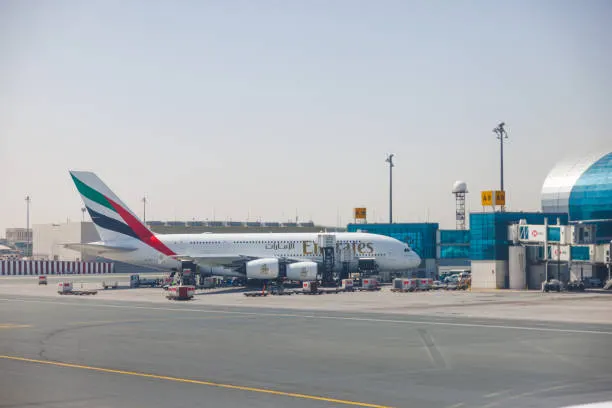
- Emirates: Cancelled specific round-trip operations between Dubai International Airport (DXB) and Kuwait (including EK853, EK854, EK855, EK856, EK857, EK858, EK859, and EK860), alongside selected Bahrain services.
- Air Arabia: Re-routed and cancelled designated flights linking UAE hubs to Bahrain, offering rebooking options for affected travelers.
Daily life within the UAE remains unaffected, and national aviation authorities continue to monitor regional airspace. Airport operators have reminded passengers travelling during the peak summer period to verify flight status directly with carriers prior to departing for the airport. Travelers departing from DXB are encouraged to utilize online check-in facilities and allow at least three hours for security processing, noting that the Dubai Metro operates from 5:00 AM to midnight (extending to 1:00 AM on Fridays and starting at 8:00 AM on Sundays).