

US president keeps military options open while floating potential deal; Yemen’s Houthis claim missile attacks on Riyadh airport and Saudi military bases
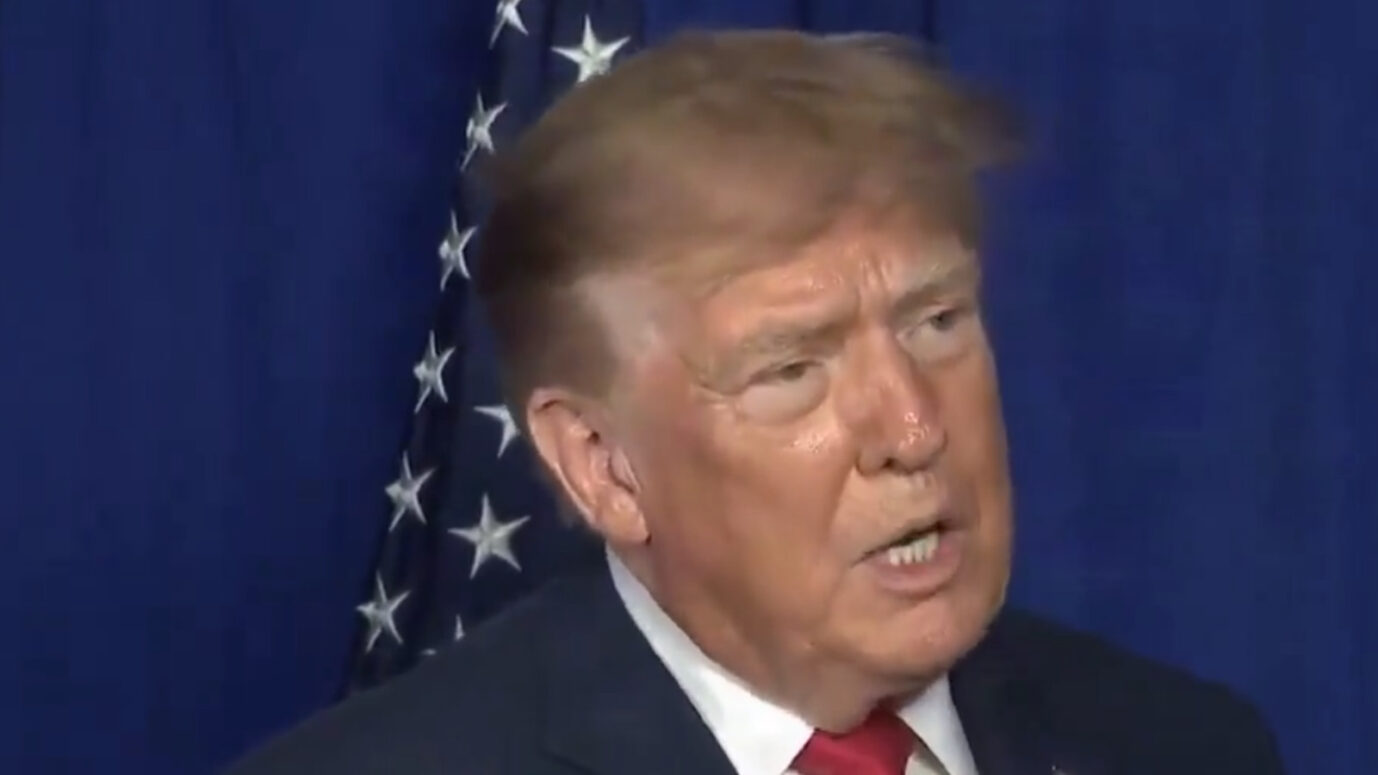
WASHINGTON / DUBAI — October 26, 2026 : US President Donald Trump stated that renewed military strikes against Iran remain a distinct option while simultaneously leaving room for a diplomatic resolution, as regional tensions escalated over maritime transit through the Strait of Hormuz and fresh cross-border strikes claimed by Yemen’s Houthi movement.
Speaking to reporters and in weekend network appearances, Trump warned that an Iranian nuclear capability would trigger catastrophic security consequences, asserting that Tehran would not hesitate to deploy such weapons.
“There’s a possibility I will,” Trump said when questioned about authorizing strikes, before adding that Washington could alternatively reach a comprehensive agreement. While Trump clarified as he departed for Michigan that no strikes were scheduled for that immediate day, he maintained strategic ambiguity over whether the United States would resume military operations or pursue economic containment.

The rhetoric coincided with a clear policy signal from Tehran regarding maritime commerce through the Persian Gulf. Iranian Foreign Minister Seyed Abbas Araghchi stated that the governance and navigational patterns of the Strait of Hormuz will not return to pre-war norms.
Speaking at a diplomatic event in Tehran carried by the official Islamic Republic News Agency (IRNA), Araghchi noted that strategic realities across West Asia had transformed permanently.
“The routes in the Strait of Hormuz will not be the same as they once were, and the strait’s management will also not be as it was in the past,” Araghchi said, insisting that regional maritime security must be administered exclusively by littoral states without the intervention of foreign naval deployments. Araghchi confirmed that related discussions are taking place and will proceed, adding that Iran remains willing to cooperate with neighboring nations.
Maritime monitors report that commercial traffic through the vital corridor has faced disruption, with global energy markets sensitive to any operational alterations along a waterway that historically transports roughly a fifth of the world’s petroleum consumption.
The broader theater of conflict widened into the Arabian Peninsula as Yemen’s Houthi movement announced ballistic missile operations against Saudi infrastructure.
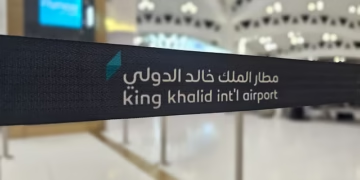
Houthi military spokesman Yahya Saree claimed in a statement that the group launched salvos targeting King Khalid International Airport in Riyadh, hours after authorities attempted to restore commercial flight schedules. Saree claimed additional strikes against King Khalid Air Base in Khamis Mushait and a naval facility in Jazan.
The Saudi-led coalition in Yemen intercepted incoming projectiles across southern sectors of the kingdom, according to regional military statements. The United Arab Emirates Ministry of Foreign Affairs condemned the attempted missile strikes, describing them as a flagrant breach of Saudi sovereignty and reiterating its full security solidarity with Riyadh.
Diplomatic and defense postures across the region also face immediate political calendar pressures. In Jerusalem, Prime Minister Benjamin Netanyahu cautioned that Iran and allied regional factions could attempt escalatory strikes designed to disrupt Israel’s upcoming nationwide elections. Trump publicly endorsed Netanyahu on his Truth Social platform, urging Israeli voters to support the prime minister and characterizing him as a wartime partner.
Regional defense ministries and commercial shipping operators remain on elevated alert as international mediators assess whether the divergent tracks of military escalation and backchannel negotiations can produce a de-escalation framework.