


All 306 passengers evacuated safely after aircraft briefly transmitted Squawk 7500 code; pilot error suspected
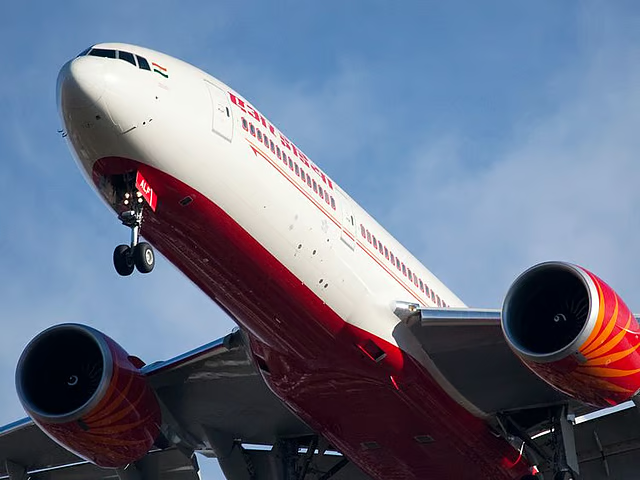
JAIPUR, Oct 14 : An Air India flight carrying 306 passengers from Frankfurt to New Delhi made an unscheduled landing at Jaipur International Airport on Wednesday morning following an emergency hijack signal that officials suspect was triggered accidentally by the cockpit crew.
Flight AI2030 touched down safely in Rajasthan’s capital at 9:35 a.m. local time after air traffic controllers detected the transmission of Squawk 7500—an internationally designated transponder code indicating unlawful interference or a hijacking attempt.
The brief distress alert was picked up by Ahmedabad Air Traffic Control while the aircraft was en route to Indira Gandhi International Airport in New Delhi. Aviation security protocols were activated immediately, directing the wide-body aircraft to divert to Jaipur.

Jaipur International Airport Director Charan Singh said preliminary assessments point to pilot error rather than an authentic security breach.
“Preliminary indications suggest the pilot may have activated the alert by mistake,” Singh said, adding that an official inquiry has commenced to determine the exact sequence of events inside the cockpit.
Upon landing, the aircraft was directed to an isolation bay away from regular terminal operations. Personnel from the Central Industrial Security Force (CISF), Rajasthan Police, and specialized bomb detection and disposal squads surrounded the aircraft to conduct mandatory anti-sabotage and physical screening procedures.
All 306 passengers on board disembarked without incident and were escorted to the terminal building while security personnel swept the cabin and screened checked luggage. Airport authorities confirmed the situation remained fully under control throughout the inspection.
Initial reports from ground teams had offered conflicting accounts over whether the alert originated from a bomb threat or an in-flight security emergency. Officials later clarified that the emergency protocols were triggered specifically by the transponder code indicating suspected unlawful interference.
No passenger or crew member reported any hostile activity or disruption inside the cabin during the flight, and authorities emphasized that no evidence has emerged pointing to an actual hijacking attempt.
Arrangements are being made to fly the stranded passengers to their final destination in New Delhi following the conclusion of mandatory security clearances, officials added.
A formal investigation into the transponder activation remains underway.