


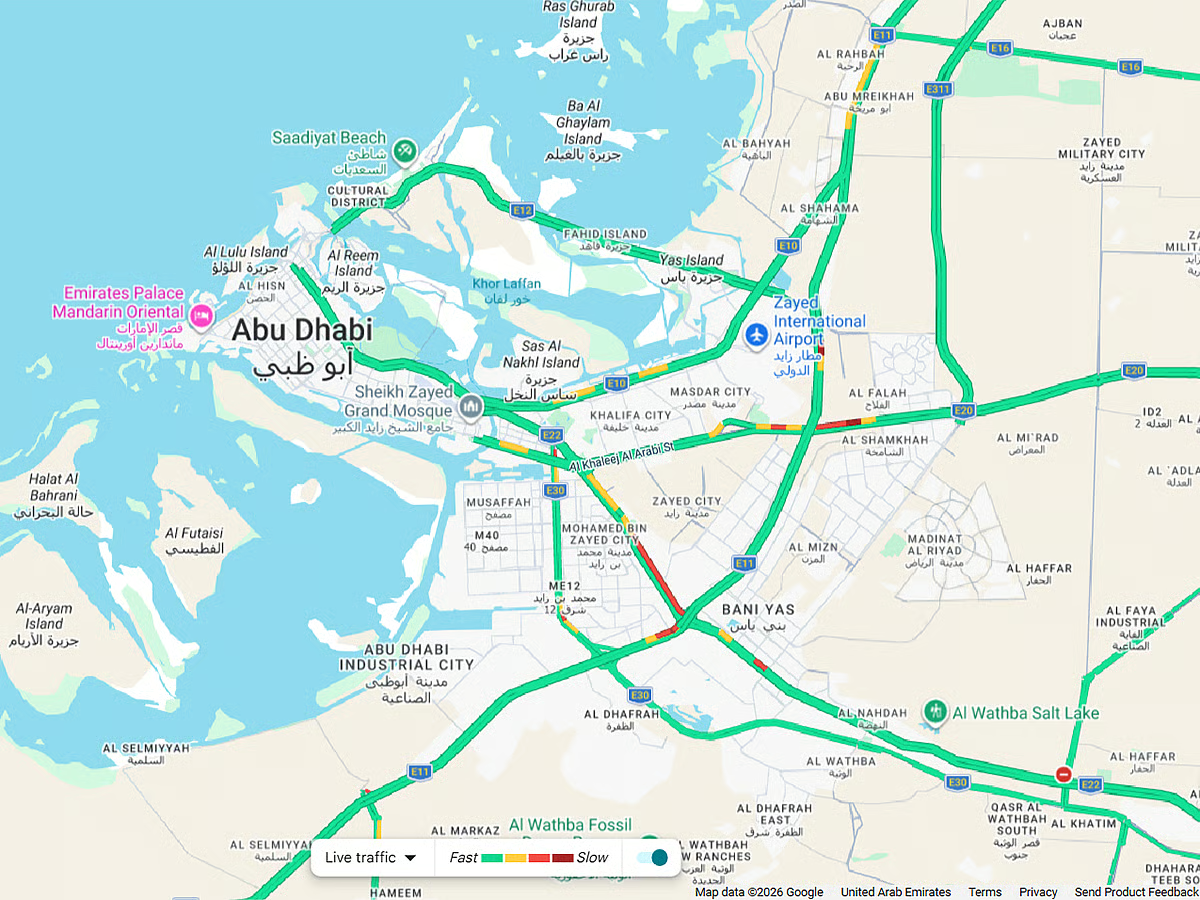
Major arteries remain clear while feeder routes and interchanges in Khalifa City and Mussafah see peak-hour queues
ABU DHABI — September 21, 2026 : Main arterial highways across Abu Dhabi carried steady traffic without severe disruptions on Monday morning, though early rush-hour commuters faced localized slowdowns on feeder corridors linking suburban districts to the city center.
Live navigation telemetry and road monitoring showed green conditions across the capital’s principal motorway network at the height of the morning commute. Sheikh Zayed bin Sultan Street (E10), Sheikh Khalifa bin Zayed International Road (E11), Sheikh Mohammed bin Rashid Road (E20), and the Abu Dhabi–Al Ain Road (E22) handled sustained volumes without major gridlock.
Chokepoints concentrated primarily at highway off-ramps and multi-lane junctions connecting residential communities to the main island. Motorists merging from Khalifa City, Mohammed Bin Zayed City, and Mussafah encountered brief queues where feeder roads filter into E20 and E22.

The localized friction points match typical weekday travel patterns in the emirate, where thousands of residents travel inward from outer suburbs toward downtown commercial quarters, government ministries, and diplomatic sectors. On the Abu Dhabi–Al Ain Road, vehicle flow decelerated around the Khalifa City perimeter as traffic filtered into secondary links.
Transport authorities continue to caution motorists traveling on Sheikh Mohammed bin Rashid Al Maktoum Road (E311) to observe the revised 100 km/h speed limit. Abu Dhabi Mobility lowered the ceiling from 120 km/h on September 14, 2026, across the designated sector linking approaches between Sheikh Zayed bin Sultan Street and Al Khaleej Al Arabi Street.
Unlike neighbouring emirates where radar grace margins exist above posted speeds, Abu Dhabi operates a strict zero-tolerance enforcement system. Radars flash at 101 km/h in a 100 km/h zone, with automated fines scaling from Dh300 to upwards of Dh3,000 depending on the excess margin.
With peak-hour flows fluctuating rapidly around residential connectors, traffic regulators advise drivers to consult real-time routing apps, leave suitable headway between vehicles, and strictly observe overhead electronic signboards.