

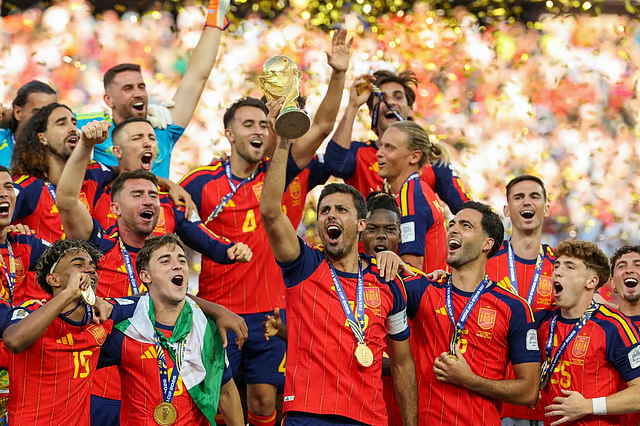
La Roja’s historic victory over Argentina secures a massive $50 million performance payout, but the mechanics of how the money is split reveal a complex structural process.
EAST RUTHERFORD, New Jersey — July 20, 2026:Spain’s dramatic 1-0 extra-time victory over Argentina at the New York/New Jersey Stadium has secured the Royal Spanish Football Federation a record-breaking financial windfall. While lifting the iconic trophy provides the defining image of global football supremacy, the distribution of the historic $50 million winner’s prize involves an intricate administrative process between soccer’s global governing body and national federations.
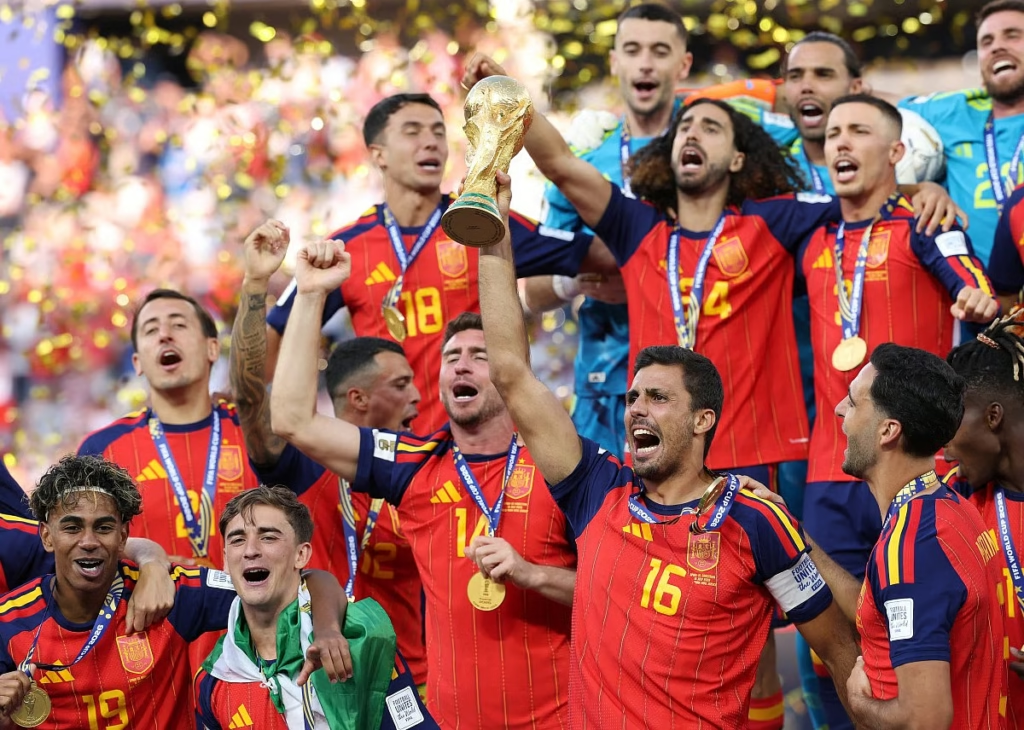
The record payout marks a significant financial evolution for international soccer, jumping from the $42 million awarded to Argentina in Qatar four years ago, and dwarfing the $2.2 million Italy collected for their 1882 triumph.

Spain’s complete financial package for their successful campaign actually surpasses $63.5 million. This total includes a guaranteed $10 million qualification fee, a $2.5 million preparation grant allocated to cover travel, accommodation, and training camp logistics, alongside the core $50 million performance prize. The funds stem from an unprecedented $871 million overall financial distribution pool approved by FIFA, which grew by 65 percent following the commercial expansion of the tournament to 48 teams playing 104 matches.
A common misconception among fans is that the multi-million dollar rewards are transferred directly to the players’ bank accounts by FIFA. Instead, the global body pays the entire sum directly to the national associations—in this case, the Royal Spanish Football Federation (RFEF). The responsibility for deciding how that money is divided lies entirely within the federation’s jurisdiction.
Before the opening whistle of the tournament, player leadership and federation executives negotiated a precise bonus structure. These private collective bargaining agreements typically dictate that between one-third and one-half of the performance revenue is distributed among the 26-man squad and coaching staff. The remaining portion is legally retained by the RFEF to fund domestic infrastructure, grassroots academies, and national youth development systems.
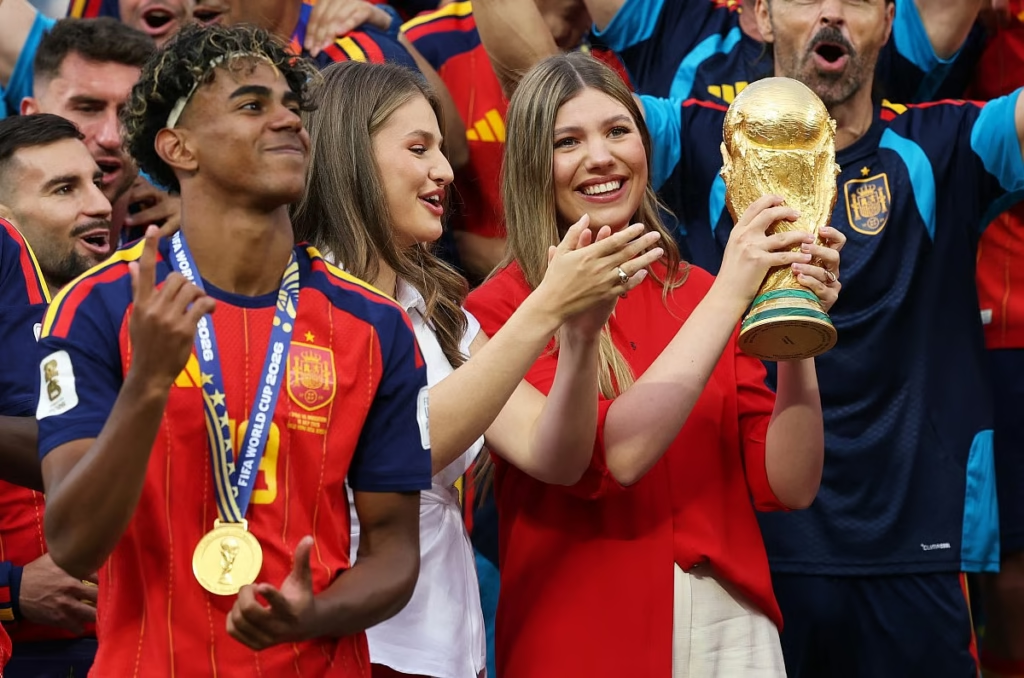
The commercial scaling of the expanded 48-team format has elevated financial baselines across the board. Every participating nation, even those eliminated without a point in the group stage, walks away with a guaranteed $12.5 million minimum package, combining the qualification fee and preparation grants.
Despite the historic scale of this year’s international prize pool, the figures still trail behind top-tier club football economics. The expanded FIFA Club World Cup offers winning clubs up to $125 million from a massive $1 billion overall pool. FIFA officials have long defended this disparity by pointing out the immense year-round operational wage structures borne by professional clubs compared to national federations, which operate on short-term international windows.